ENGLISH
 FRANÇAIS
 РУССКИЙ
 العربية
 garyguan@tkdlkj.cn
Key Role and Development Trends of Marine Diesel Generators (Part 1 of 6)
Marine diesel generators are the heart of a ship's electrical system, providing reliable power for navigation, communication, lighting, lifting, and all crew living equipment. As the global shipping industry transitions toward greener and smarter operations, marine power generation technology is undergoing profound transformation. This article explores the key roles, industry market, emission regulations, and technology trends of marine diesel generators.
1. The Core of Ship Power Systems
On modern vessels, the electrical system is no longer just an auxiliary facility but a "lifeline" that supports the safe navigation and normal operation of the entire ship. Marine diesel generators convert the chemical energy of fuel into electrical energy through diesel engines driving alternators, powering all types of electrical equipment on board — from navigation and communication systems such as radar, GPS, and radio, to crew life support systems including lighting, air conditioning, refrigeration, and galley equipment, to operational and lifting equipment such as deck machinery, cargo cranes, ballast pumps, and thrusters — all depend on the stable output of generator sets.
Power load requirements vary significantly across vessel types. A 10,000-ton bulk carrier typically has a power load of 300-600 kW. Container ships, due to numerous reefer containers and automated equipment, demand 800-2000 kW. Large engineering vessels, drilling platforms, and luxury cruise ships, due to propulsion assistance, dynamic positioning, and extensive living facilities, often exceed 5000 kW in power requirements, with some large cruise ships reaching a total installed capacity of over 10000 kW.

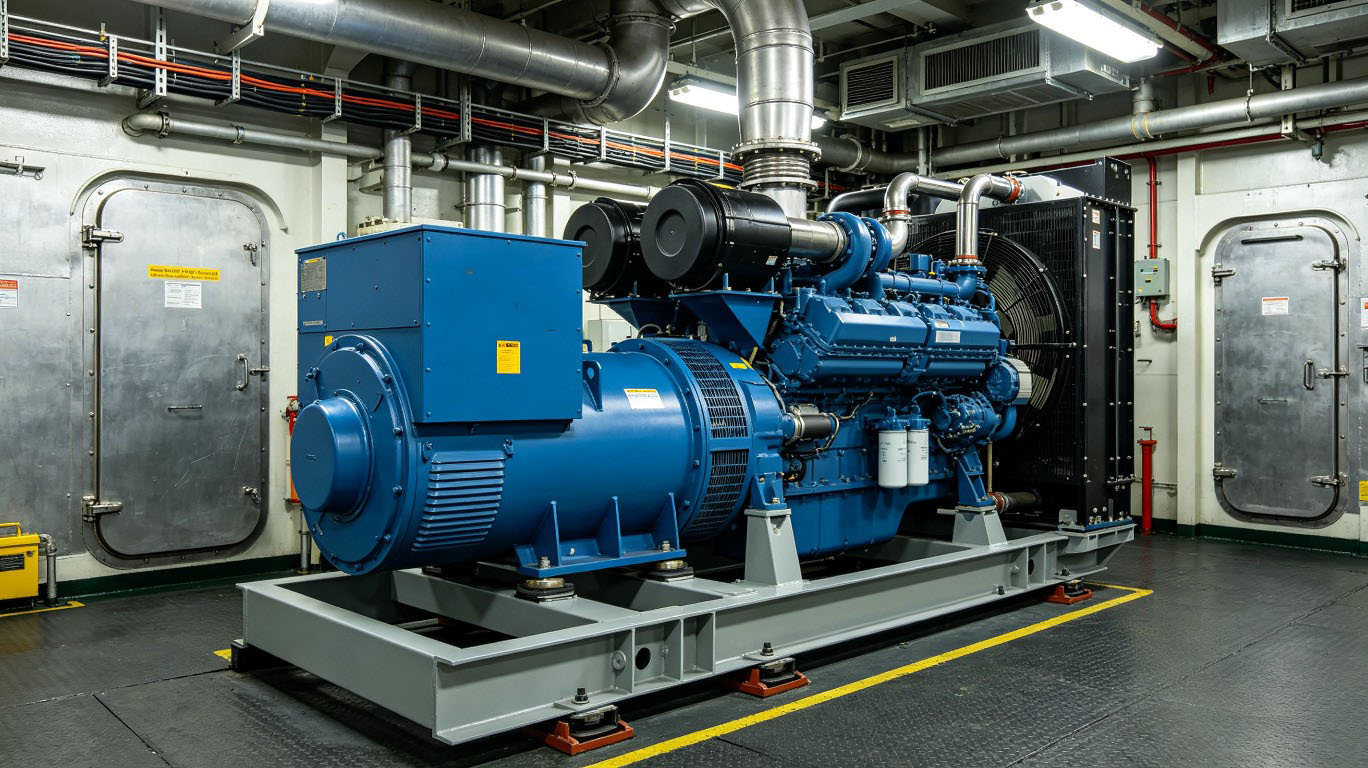
Marine diesel generators in a ship engine room. Source: Wikimedia Commons, By Herve Cozanet, CC BY-SA 3.0
Because power is so critical, oceangoing cargo vessels typically employ redundant design, equipped with 2-3 auxiliary generator sets operating in parallel. This configuration ensures that when any one unit is shut down for maintenance or fails, the remaining units can independently meet the vessel's basic power demands, avoiding navigation hazards caused by power outages. Classification society rules explicitly require that ship power systems possess a certain degree of redundancy, and there is a direct, inseparable relationship between generator reliability and navigation safety.
Key Data
Typical power load for 10,000-ton bulk carriers: 300-600 kW; container ships: 800-2000 kW; large engineering vessels and cruise ships: over 5000 kW. Oceangoing cargo vessels are typically equipped with 2-3 auxiliary generator sets to ensure redundant power supply, so that when any unit stops, the remaining units can still meet the vessel's power needs.
2. Key Differences from Land-based Units
Although marine diesel generators share similar working principles with land-based diesel generator sets, their vastly different operating environments result in significant differences in design, manufacturing, and maintenance. Understanding these differences helps explain why marine units require higher technical thresholds and stricter quality control.
Continuous Vibration and Pitching: Ships constantly undergo six-degree-of-freedom motion in waves (roll, pitch, heave, etc.), subjecting unit bases to alternating loads. This places far higher demands on structural strength, fastener loosening prevention, and flexible piping connections than land-based units, otherwise bolt loosening and pipe fracture failures are likely.
High-Salt, High-Humidity Marine Atmosphere: Marine air contains large amounts of salt. Salt spray accelerates corrosion of metal components, especially electrical elements, terminals, and exposed metal surfaces. Marine units require anti-corrosion coatings, sealed electrical cabinets, and stainless steel fasteners, with regular salt spray protection inspections.
High-Temperature Engine Room: Ship engine rooms are enclosed spaces with concentrated heat sources from diesel engines and boilers. Engine room intake temperatures can reach 40-50°C, far higher than land-based generator rooms at ambient temperature. High temperatures reduce cooling efficiency and affect insulation life, so marine unit cooling systems require special design and increased margins.
Strictly Limited Space: Ship engine rooms are extremely space-constrained. Units must employ compact designs while reserving maintenance access and disassembly space. This imposes stringent requirements on unit dimensions, weight distribution, and maintainability, often requiring customized design.
These environmental differences make marine diesel generators far more complex than land-based units in material selection, structural design, protection ratings, and manufacturing processes, driving the formation of dedicated marine unit product lines. A qualified marine unit must not only "generate power" but also "generate power stably in rough seas and durably withstand salt spray."

Marine propulsion diesel engine. Source: Wikimedia Commons, By S.J. de Waard, CC BY-SA 4.0
3. Global Market Size and Growth Trends
The marine generator set market is closely linked to the prosperity of the global shipping industry. In recent years, with steady growth in global trade volume, accelerated replacement of aging fleets, and continued development of maritime tourism, the marine generator set market has shown a steady growth trend.
According to data from multiple market research firms, the global marine generator set market size is approximately $4.7-5.55 billion in 2025. Looking ahead, the market size is expected to reach $7.55-7.9 billion by 2032, with a compound annual growth rate (CAGR) of approximately 4.5-5.9% during the period. Data from Clarksons Research shows that the global marine generator set market size was approximately $6.83 billion in 2024, projected to grow to $7.41 billion in 2026, reflecting the overall industry expansion trend.
$4.7-5.55B 2025 Global Market Size | 4.5-5.9% CAGR (Compound Annual Growth Rate) | $7.41B 2026 Market Size Forecast |
Key drivers of market growth include: first, continued growth in global trade volume, driving new shipbuilding and capacity expansion; second, aging fleet replacement, with many vessels built in the early 2000s entering replacement cycles, and new ships generally adopting more efficient and environmentally friendly power generation equipment; third, maritime tourism development, with increasing orders for luxury cruise ships and river cruise vessels that have enormous power demands; fourth, offshore and special vessel demand, with emerging vessel types such as offshore wind farm maintenance vessels and deep-sea engineering vessels creating new market demand for generator sets.
4. Green Shipping and Emission Regulations
The International Maritime Organization (IMO), through Annex VI of the MARPOL Convention, has imposed increasingly strict controls on ship air pollutant emissions, which has become the most important external force driving transformation in marine power generation technology. The evolution of emission regulations directly determines the design direction and technical roadmap of marine diesel generators.
NOx emission control is one of the core contents of Annex VI. The IMO divides emission controls into different tiers: Tier II standards have been globally applicable since 2011, setting baseline requirements for nitrogen oxide emissions from diesel engines; Tier III standards have been applicable in Emission Control Areas (ECAs) since 2016, requiring NOx emissions to be reduced by approximately 80% compared to Tier I. This means that vessels operating within ECAs must employ advanced aftertreatment technologies such as Selective Catalytic Reduction (SCR) and Exhaust Gas Recirculation (EGR) to meet the standards.
Currently established ECA emission control areas include the North Sea, Baltic Sea, North American waters (including U.S. and Canadian coastal waters), and the U.S. Caribbean Sea area. Within these areas, vessels must use fuel that meets strict emission standards or be equipped with equivalent emission reduction technology. Additionally, the implementation of the 2020 global sulfur cap reduced the global ship fuel sulfur content limit from 3.5% to 0.5%, a policy that has profoundly affected fuel choices and operating costs for all marine combustion equipment including generator sets.
Emission Compliance Reminder
Emission regulation compliance has become a hard threshold for ship operations. Vessels that do not meet Tier III requirements cannot enter ECA areas, and violations face hefty fines and even port detention. When purchasing generator sets, shipowners must fully consider the vessel's operating routes and future regulatory trends, prioritizing low-emission, dual-fuel (LNG/diesel), or upgradable aftertreatment system solutions to mitigate compliance risks and asset depreciation.
Driven by regulations, dual-fuel generator sets (LNG/diesel) and low-emission generator sets are becoming the mainstream choice for new ship orders. LNG fuel is virtually sulfur-free, with significantly reduced NOx and particulate matter emissions, making it an effective solution for meeting ECA requirements. Meanwhile, generator sets using alternative fuels such as methanol and ammonia are under development, signaling that marine power generation technology is moving toward deeper decarbonization.

LNG tanker - dual-fuel technology enables cleaner shipping. Source: Wikimedia Commons, By Andrew Bone, CC BY 4.0
5. Intelligence and Digitalization Trends
Beyond greening, intelligence is another major development direction for marine power generation technology. Digital technology is deeply penetrating the entire lifecycle of generator set design, operation, and maintenance, driving marine power systems from "passive response" to "proactive prediction."

Modern engine control room with digital monitoring systems. Source: Wikimedia Commons, By Larry D. Moore, CC BY 4.0
Remote Monitoring and Diagnostic Systems: Sensor networks collect real-time operating parameters such as temperature, pressure, vibration, and current, transmitting data to shore-based monitoring centers via satellite communication. Crew engineers and onshore engineers can monitor unit status at any time, detect anomalies promptly, and significantly reduce fault response time.
Predictive Maintenance: Based on big data analysis and AI algorithms, historical operating data and real-time monitoring data are deeply mined to identify early signs of potential failures, enabling advance warnings and scheduled maintenance. Compared to traditional periodic maintenance, predictive maintenance effectively prevents unexpected failures and reduces unplanned downtime and repair costs.
Digital Twin Technology: High-precision virtual models are created for physical generator sets, synchronously simulating unit operating status in digital space. Through digital twins, engineers can optimize operating strategies, evaluate condition adjustment plans, and even conduct fault simulations and training without affecting actual operations.
Energy Management System (EMS): Intelligently schedules the start/stop and load distribution of multiple generator sets, automatically selecting the optimal unit combination and operating point based on changes in whole-ship power load, avoiding low-load operation, improving overall generation efficiency, and reducing fuel consumption and emissions.
These intelligent technologies not only improve unit reliability and operating efficiency but also significantly reduce full-lifecycle operating costs. For shipowners, intelligence is not merely a technology upgrade but a key measure to address shipping industry profit pressures and enhance core competitiveness. It is foreseeable that future marine generator sets will become increasingly "smart," serving as an important component of ship intelligent energy efficiency management systems.
Taikang Power has been deeply engaged in the marine and industrial diesel generator field for over 20 years. With rich international trade experience and a professional technical team, we provide CCS-certified diesel generator sets and one-stop solutions for global customers. Our products are widely used in oceangoing cargo vessels, engineering ships, offshore platforms, industrial plants, and data centers.
Core Advantages
Complete Certifications: All marine generator sets are CCS type-approved, with ABS, BV, DNV, LR and other major international classification society certifications available
Wide Power Range: Providing units from 20kW to 3000kW, covering high-speed and medium-speed full series models
Customized Design: Tailored generator set configurations based on vessel type, engine room space, and power load
Global Service Network: Service stations established in major port cities worldwide, providing 24-hour technical support and spare parts supply
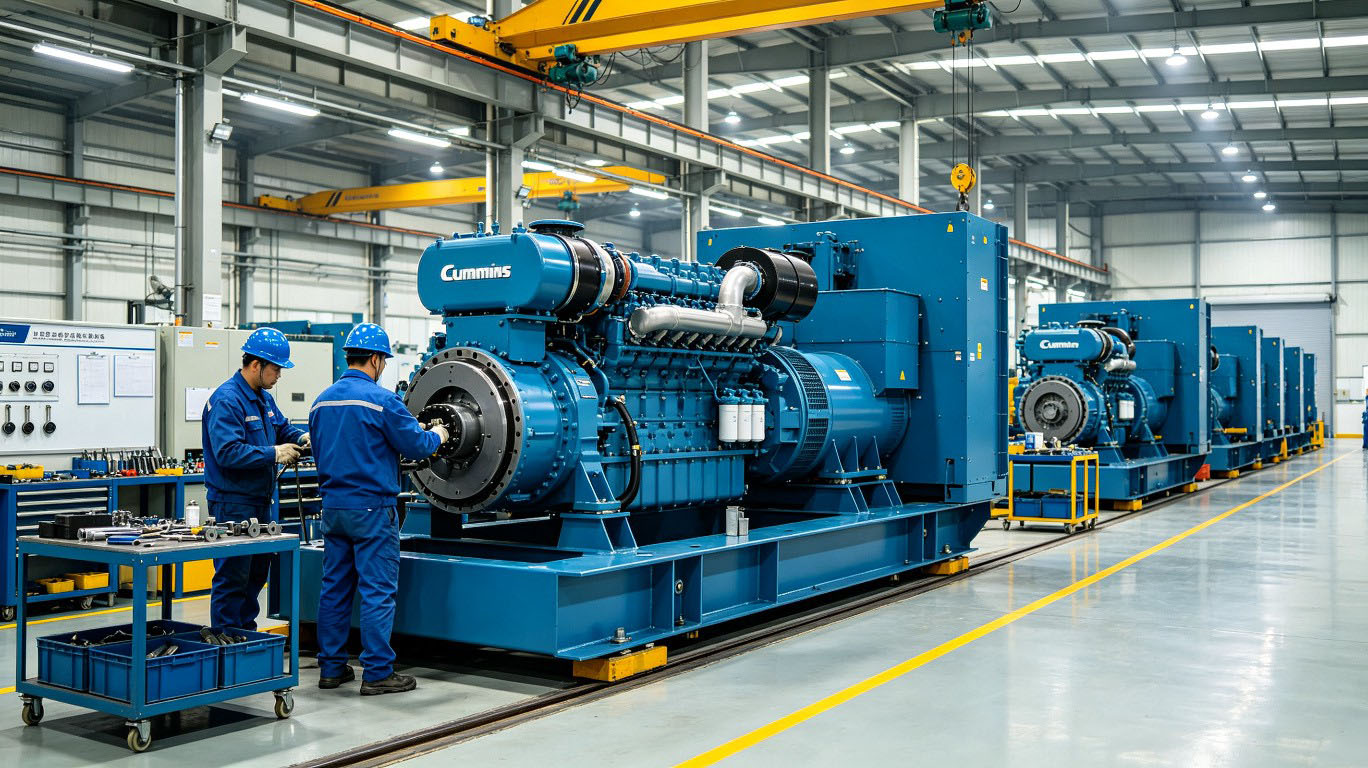
OEM Quality Assurance: Equipped with internationally renowned diesel engines from Cummins, Perkins,Weichai, Etc.